 Link building
 Guest Posting
 Niche edits
 Profile backlinks
 Crowd links
 Submission links
 Contextual Backlinks
 White-label link building
 PBN Building
 Haro links
 Digital PR
 SEO
SEO
 SEO copywriting
 Google Indexing
 Quora links
 Add to catalogs
 AI SEO
 Reddit
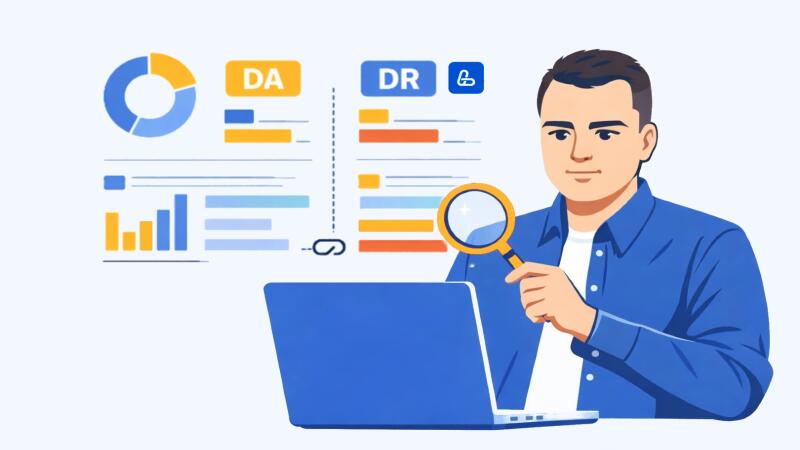
You’re looking at a website for a backlink. You see two numbers: say, DR 62 and DA 41. It makes you wonder: which of these metrics tells the real story about the site’s strength? And why are they so different?
Getting hung up on which is better: DR or DA for a site is like arguing whether a car needs an engine or wheels more. Both are absolutely critical, but they serve different purposes.
Let’s break down what’s really behind the acronyms DA and DR and how to use that knowledge to pick a quality link source.
DA and DR in SEO: What’s Really Behind Those Numbers Everyone Checks?
Ahrefs DR vs Moz DA often get mixed up because they both signal a site’s “strength.” But behind similar-looking numbers are different calculation methods and, as a result, different meanings. Let’s spell it out.
What is Domain Authority and Domain Rating: The Go-To Numbers for Any SEO Pro
Domain Authority (DA) is a predictive score from Moz. A higher number means a site has a better chance of ranking at the top of Google’s search results. It runs on a 1 to 100 scale.
The key word is “predictive.” Moz doesn’t know Google’s secret ranking recipe. Instead, their machine learning system analyzes thousands of sites to spot patterns in what top-ranking pages have in common. The combined effect of those patterns gives the final DA score. Links are a huge part of it, but not the only part.
Domain Rating (DR) is an analytical metric from Ahrefs. It measures the strength of a site’s backlink profile: a higher number means more quality external links are pointing to it. It also uses a 1 to 100 scale.
DR answers one question: how strong and numerous are the sites linking to this domain? It’s a direct measure of “link equity,” not an overall ranking forecast.
In simple terms: DA tries to guess your success by looking at many clues. DR just states a fact by measuring one major asset – your backlinks.
What These Metrics Actually Show (And Why They’re Not a Ranking Guarantee)
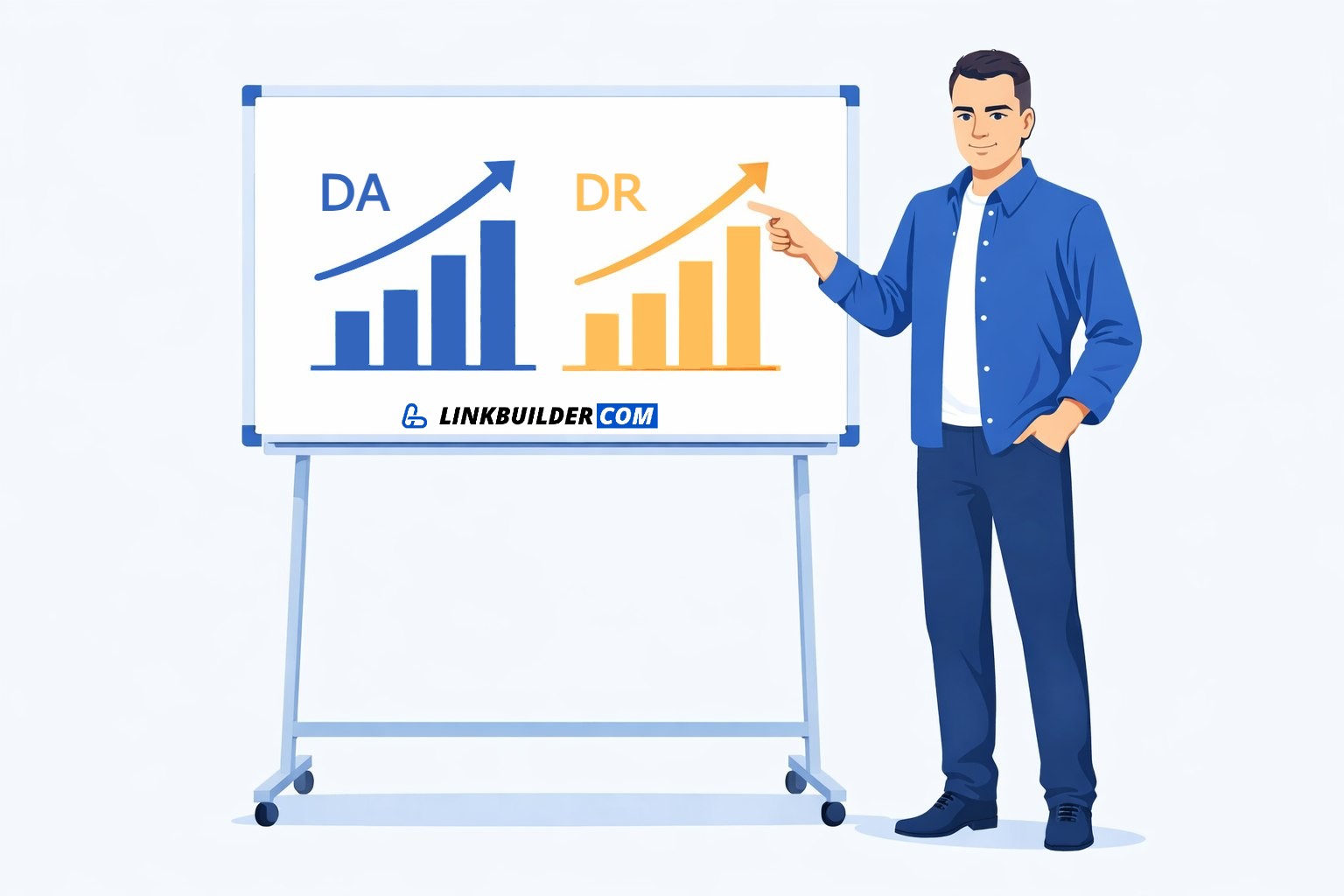
So, we’ve defined the DA and DR metrics. What do they actually tell us?
A DA of 50 means Moz thinks your site is stronger than 49% of sites in their index, but weaker than the other 50%. It’s a logarithmic scale: going from 20 to 30 is fairly easy, but climbing from 70 to 80 is incredibly tough. The same goes for DR.
The golden rule for DA and DR in SEO is this: neither of these metrics is a direct Google ranking factor.
Google doesn’t plug Moz’s or Ahrefs’ data tables into its algorithm. It analyzes the raw data itself: link quality and relevance, content, technical health, user signals.
Moz and Ahrefs built their systems to conveniently bundle up and interpret some of that data for us. A high score means a site has traits Google usually likes. But “usually” is not a promise.
Here’s a real example: a niche expert site with DA 35 and impeccable content can consistently outrank a news portal with DA 65 but shallow articles. That’s because Google often values topic relevance and depth more than a domain’s general “authority.”
Think of these metrics as a filter for a quick first pass, not the final word. They help you ditch obviously weak sites, but they should never be your only criteria.
The Nuts and Bolts: How DA and DR Actually Calculate Your “Authority”
To use DA vs DR wisely, you need to know how they’re built. Different math leads to different pictures of the same site.
The Domain Rating Algorithm: Why Ahrefs Only Cares About Backlinks
Ahrefs judges solely on the link profile. Content, traffic, and site structure don’t factor into the DR score.
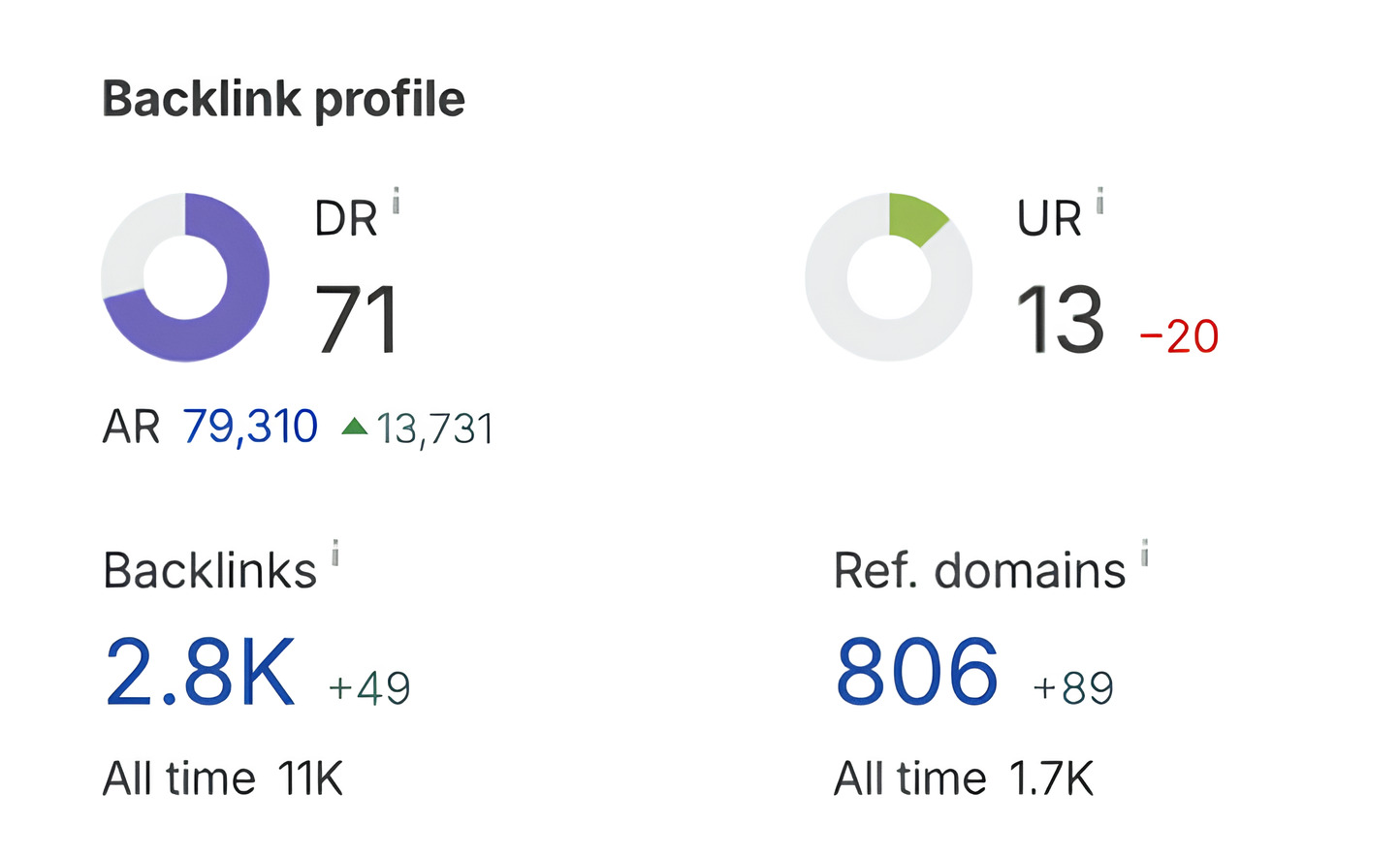
Domain Rating calculation looks at:
- How many unique websites are linking to you.
- The DR of those linking websites.
- How many other links those linking sites have.
- How the “link juice” is distributed.
The critical part is the transfer of link equity. If a site with DR 80 links out to thousands of others, each link passes a tiny bit of power. If that same site only links to 10 others, the effect is much stronger.
The Domain Authority Algorithm: What Else Moz’s “Smart” System Considers
The DA algorithm uses machine learning. Moz compares sites against each other to predict which will rank higher. To do this, it analyzes a mix of factors.
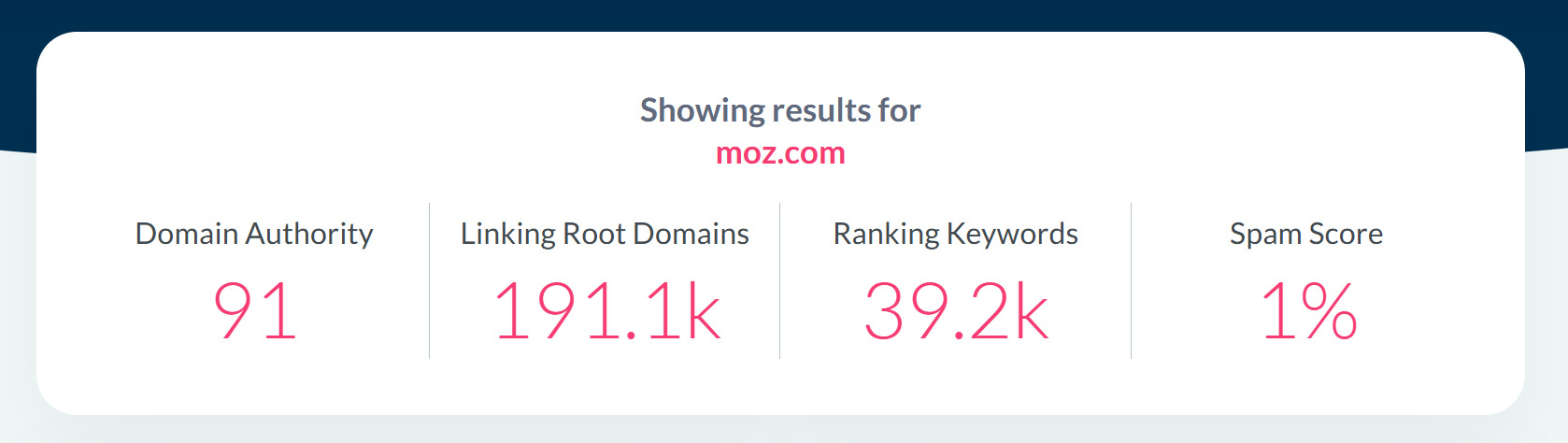
Domain Authority takes into account:
- Number of linking domains.
- The quality of those domains.
- How links are spread across the site’s pages.
- Signs of spam in the link profile.
- The site’s overall structure.
The exact DA formula is a secret and can change.
DA is a relative metric. Your score always depends on Moz’s database and how other sites are doing. If your competitors’ scores jump, your DA could drop even if you haven’t lost any links.
Logic Comparison: The Core Difference in How They Evaluate
The difference is in their fundamental goal:
- DA is a prediction, trying to account for many signals. It works on a comparative model and forecasts ranking potential.
- DR is a measurement, zooming in on one key asset. It works on a mathematical model and shows link profile strength.
This is exactly why you can’t answer ‘DA vs DR’ without knowing your task. For a broad view of domain reputation, DA is better. For judging the passable strength of a link, DR is clearer.
In practice, you use DA and DR together, for different reasons. Ignoring one is like looking at a site with one eye closed.
Quick Reference: A Handy Table of the Key Differences
| Parameter | Domain Authority (DA) by Moz | Domain Rating (DR) by Ahrefs |
|---|---|---|
| Main Goal | Predicts ranking potential. | Measures link profile strength. |
| Key Factors | Links, site health, quality signals, domain age. | Quantity & quality of external links. |
| Scale | Logarithmic, 1-100. | Logarithmic, 1-100. |
| Updates | When Moz updates its machine learning model. | Regularly, as links are indexed. |
| How to Read It | High DA suggests a generally strong, healthy site. | High DR indicates powerful backlinks. |
DA vs DR in Link Building: A Practical Guide to Picking Donors
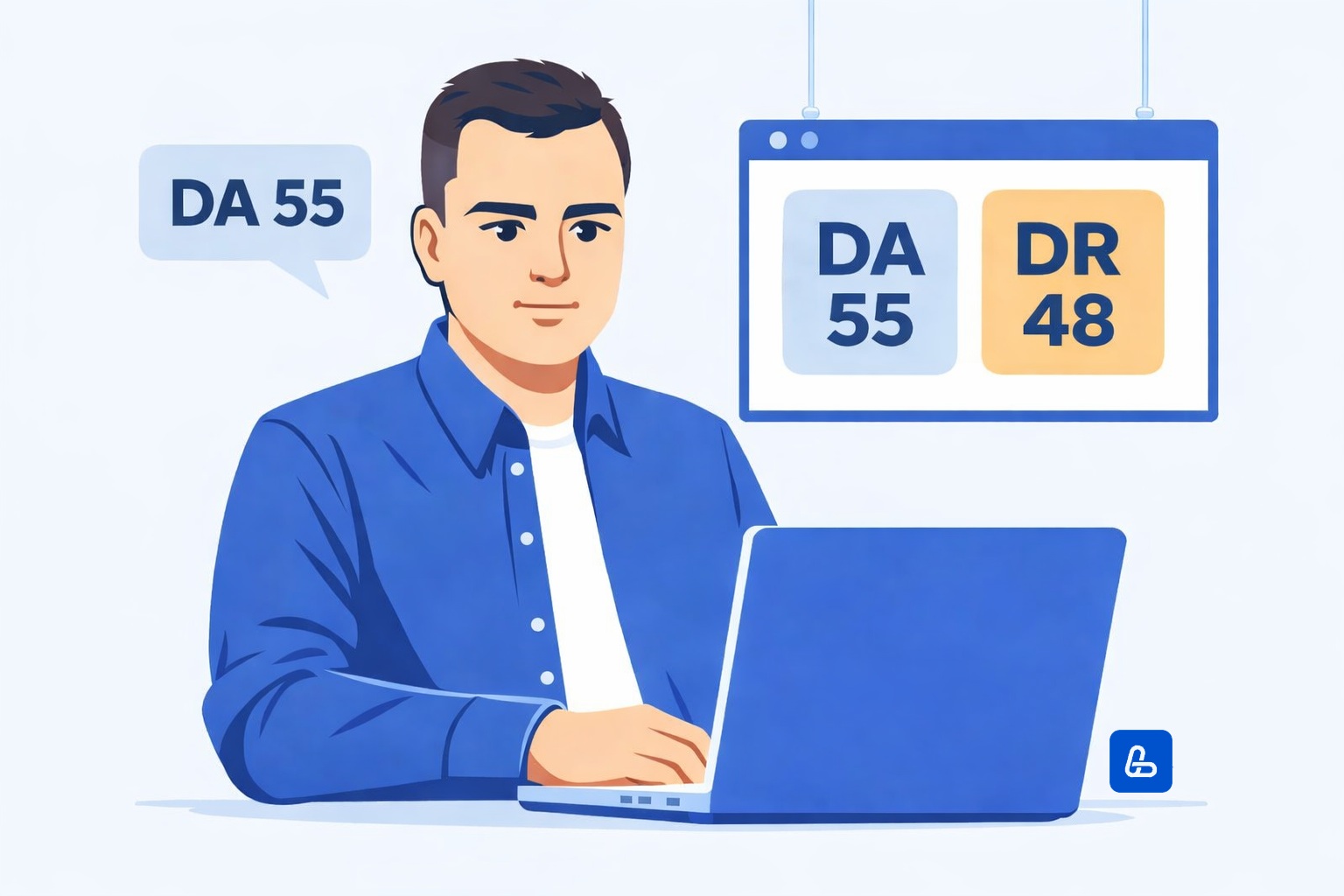
DA and DR numbers are tools for making decisions. Let’s see which one to use and when.
When a High DA Matters: Three Use Cases
DA works great as an overall quality filter. Use it when you want a well-rounded assessment.
Scenario 1: Finding informational or news sites.
A high DA is a good sign that a domain stands out in its niche. These sites often have solid tech, steady traffic, and fresh content – all good for a guest post or brand mention.
Scenario 2: First-pass filtering of a big list.
When you have hundreds of potential donors, DA helps you quickly cut out the weak or suspicious ones. It’s not the final decision, but it makes your manual review much faster.
Scenario 3: Building brand trust.
If you want to boost your site’s credibility, DA helps you avoid low-quality neighborhoods. This is key in sensitive niches like finance, healthcare, or legal services, where association matters.
When a High DR is Critical: Gauging Real “Link Power”
If your main goal is to gain ranking power from links, DR is your star metric. It shows how much link equity a domain can actually pass on.
Prioritize high DR when:
- Promoting commercial pages. Product pages, service pages, and landing pages thrive on strong links. Here, the DR vs DA for backlinks debate leans toward DR for its practical utility.
- Boosting specific inner pages. When your link points deep into a site (not the homepage), you need the donor’s raw link power. DR reflects this better than DA.
- Competing in tough niches. In fields like finance, betting, crypto, or SaaS, the gap between DR 30 and DR 60 is massive. In these battles, DR usually wins.
But watch out: a high DR alone can be a trap. A site might have great links but zero traffic and sketchy content. That’s why even with good DA and DR metrics, you always need a manual check.
How to Check a Site’s DA and DR Before You Buy a Link
Checking every site manually in Moz and Ahrefs eats up hours. You’re constantly switching between tools.
The LinkBuilder.com tool fixes this. Our Sponsored Content Finder database pulls in and updates all the key domain metrics, including Ahrefs DR vs Moz DA. No more jumping between tabs – the data is right there and kept fresh.
We track over 300,000 sites, filterable by topic, location, traffic, authority, and price. It lets you compare options side-by-side, saving you a ton of legwork.
Here’s how it works:
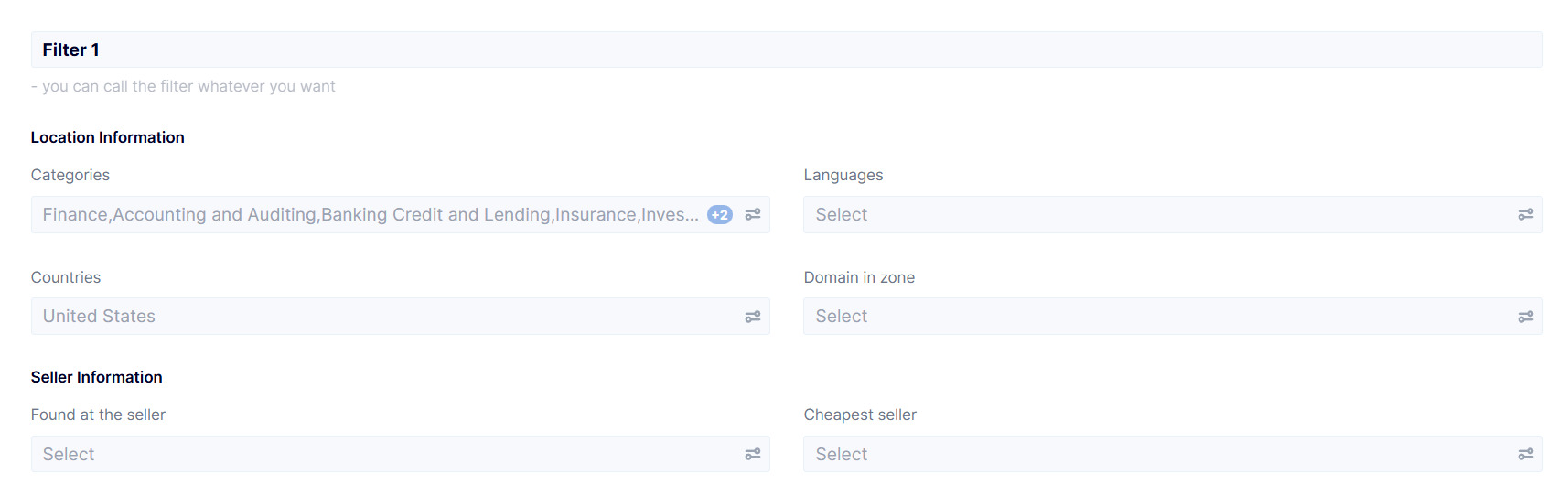
- Log in, open the Sponsored Content Finder, and use filters to find a donor – like in the “Finance” category.
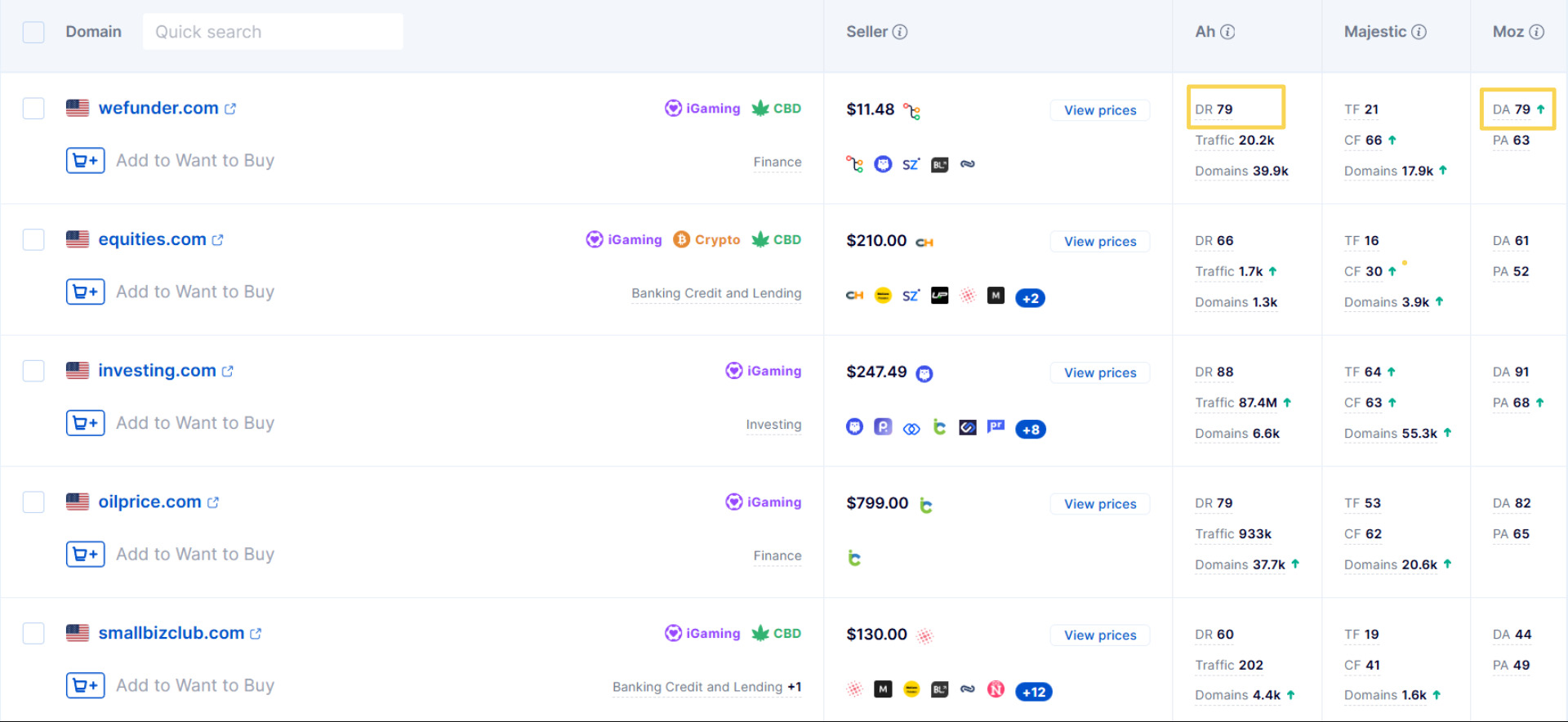
- The table shows you current DA and DR for every site immediately.
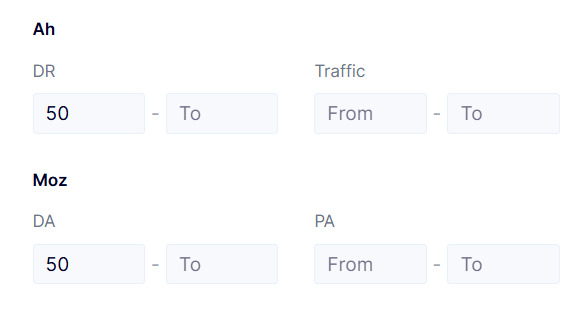
- Want all finance sites with DA and DR above 50? Just edit the filter.
- Sort the list by any metric. For example, sort by “Domain Rating” from high to low to see the strongest link sources first.
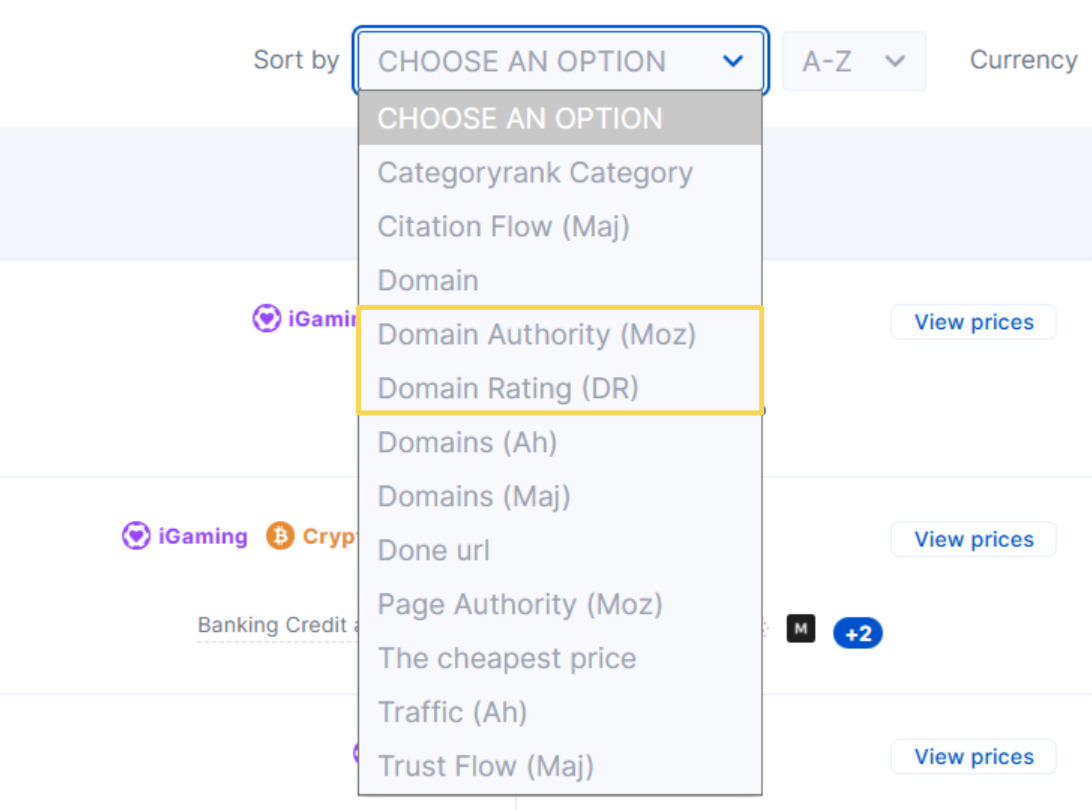
This is a huge time-saver. You see the DA and DR metrics instantly and can decide which to focus on based on your goal. You can then dive deeper into a site’s traffic and content right from its profile.
The metric you choose shapes your outcome. But numbers are just the start. After the DA/DR filter, you must check the donor manually. Here’s how.
The Manual Donor Check: What to Look For Beyond DA and DR
Numbers help screen out the worst. But you can’t stop there. Even perfect domain metrics DA and DR don’t guarantee a good link. A site might look strong in the tools but be a ghost town in reality.
You check manually to see what’s really there. Does the site have a pulse? An audience? Is it likely to get penalized tomorrow?
Here’s a basic checklist that gives you the full picture and lets you decide with confidence.
The Metrics That Tell the Whole Story
Before you start clicking around, gather some key data:
- Organic traffic.
- Content quality and freshness.
- Signs of unnatural link building.
- Relevance to your own site’s topic.
This info doesn’t replace DA and DR; it explains them.
Our database gives you these core metrics right in the table:
- Domains (Ahrefs/Majestic) – Unique websites linking to this domain.
- Traffic (Ahrefs) – Estimated monthly organic search visits.
- Trust Flow (TF) (Majestic) – A score for link quality and site trustworthiness.
- Citation Flow (CF) (Majestic) – A score for the volume of links to the site.
- Page Authority (PA) (Moz) – Ranking potential of a specific page.
You can even see growth trends. Click on any metric to view its change over time:
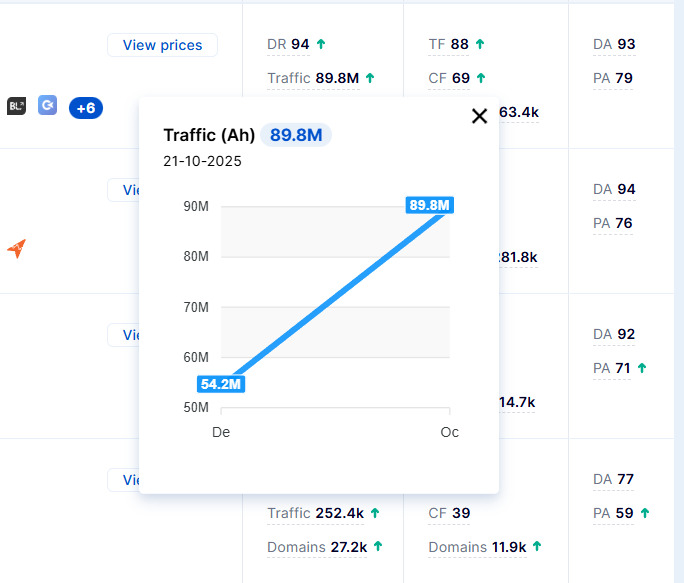
The data updates regularly, so you’re never looking at old info.
Now, let’s get hands-on.
Test #1: Does This Site Have Real Traffic and People?
A site with high DR but no traffic is a major red flag. It usually means links were built artificially. These donors pass little value and come with risk.
How to check:
- Look at organic traffic trends for the last 6-12 months. Sudden drops can mean penalties.
- Test its search visibility. Google a few topic-related phrases. If it’s not in the top 100, it’s probably not a valuable donor.
- Glance at comments and social shares. No engagement often means no real audience.
A healthy sign is steady, even if modest, traffic – especially to blog posts or guides. It means the site is alive and useful.
Test #2: Content, Design, and the “Human” Factor
Open the site and look at it like a visitor. Good sites are built for people.
What to look for:
- Content: Are articles original, detailed, and well-written? Are they recent? Or is the content thin, repetitive, or clearly AI-generated?
- Design & Usability: Is the site modern and mobile-friendly? Easy to navigate? Or is it an old, ad-cluttered template?
- The “Human Face”: Is there an “About Us” page, contact info, a privacy policy? Can you see who’s behind it? These are basic trust signals.
A site built just for selling links is usually obvious: cookie-cutter design, generic articles, links stuffed in awkwardly. It might have decent DA and DR metrics, but it offers no real value.
LinkBuilder.com makes this easy. From the donor table, just click the website address to open it and do your visual check in seconds.

Test #3: Spotting Unnatural Links in the Donor’s Profile
The final step is a quick look at the donor’s own link profile. Red flags are often visible without a deep dive.
What to check in Ahrefs or Majestic:
- Where links come from: Are most links from low-quality directories, forums, or spammy blogs? Do the anchors look unnatural?
- Growth pattern: Does the graph of linking domains show a smooth rise, or sudden, unnatural spikes?
- Anchor text: Is it overstuffed with commercial keywords, or is it a natural mix of brand names, URLs, and generic phrases?
A site with a spammy link profile is at risk. A link from it might pass no weight, or even hurt your site.
Remember: the influence of DA and DR on rankings only works in a natural context. A link from a spammed-out site rarely helps.
The 5-Minute Donor Vetting Checklist
This simple process helps you quickly filter out bad options using data, not guesswork:
Step 1: Quick traffic & topic check.
Open a SimilarWeb or Ahrefs overview. Confirm the site gets organic traffic (e.g., 1k-2k visits/month). Check its top 5 ranking keywords. They should match its niche and yours.
Step 2: Link-to-domain ratio.
In Ahrefs, go to Backlinks > Referring Domains. Look at the ratio of total backlinks to unique domains. A healthy range is ~2-5 links per domain (e.g., 5,000 links from 2,000 domains). A ratio of 1:50 (50,000 links from 1,000 domains) screams spam.
Step 3: Manual relevance & content check.
Open the homepage and 2-3 recent posts. Ask: Is the content unique and helpful? Is it written for humans? Is there an author and a recent date? Does the design look trustworthy? This 2-minute look is crucial.
Step 4: Tech & transparency spot-check.
Quickly test loading speed with Google PageSpeed Insights. Make sure “Contact,” “About,” and “Privacy Policy” pages exist. Missing these is a bad sign.
The Decision: Use the full picture, not just one number.
Don’t choose based only on high DA or DR. The site must pass all four checks. If it fails two (e.g., no traffic AND bad content), walk away – even if it has DR 70. Quality always beats a single number.
Of course, there are exceptions. Sometimes a new, promising site or a hyper-relevant niche resource is worth it despite average metrics. But that’s a strategic call, not the rule.
In the end, what helps your project matters more than hitting arbitrary score targets.
Pitfalls and Hidden Risks: 5 Mistakes When Picking Donors by DA/DR

Chasing high DA vs DR scores can blind you to real dangers. These errors can waste your budget and even damage your site’s search standing.
Mistake #1: Ignoring Topical Relevance
Placing a link on a site totally outside your field is pointless. Search engines value topical relevance. A link from a medical blog to an auto repair site looks fake and passes little topical weight.
Check relevance manually. See what the site actually talks about and who reads it. Even a “general blog” might have a core focus on tech or travel, making it irrelevant for your finance business.
Mistake #2: Buying Links in PBNs or “Link Farms”
A PBN (Private Blog Network) is a group of sites built mainly to sell links. They can game DA and DR metrics, but the links aren’t the same as genuine editorial mentions.
Spot low-quality PBNs by their look: similar templates, unnatural link growth spikes, and no social buzz. The content feels generic.
Managing PBNs yourself is risky. If you need this approach, order PBN links from a professional agency like LinkBuilder.com. We handle proper setup, quality content, and technical isolation to minimize risk.
Mistake #3: Not Checking the Domain’s Past
A domain might have a shady history – used for spam, black-hat SEO, or worse. That past can “poison” the current site in Google’s eyes, even with all-new content.
Use Archive.org (Wayback Machine) to see old versions of the site. Check Ahrefs for a history of spammy backlinks that might still be affecting it.
Mistake #4: Overlooking the Donor’s Anchor Profile
If a site’s outbound links all use over-optimized, keyword-rich anchors, it’s clearly selling links. Getting a link from there puts you in bad company.
Before you buy, look at how the site links to others. Open a few articles. Natural linking uses brand names, “learn more here,” and varied phrases.
Mistake #5: Skipping Regular Re-checks
Donor sites can change. They might be sold, turn into spam hubs, or shift focus. A link that helped a year ago could become a toxic liability.
Audit your existing links periodically. Use a simple checklist: Has the site’s traffic dropped >50%? Has the design/content quality nosedived? Are new outbound links spammy? This protects your link profile over time.
Your Growth Plan: A Smart Strategy for Boosting Your Own DA and DR

We’ve covered how to choose a site by DR and DA. Now, how do you improve your own scores?
Remember: DA and DR rise because your site becomes more valuable, not because you chase the numbers. Here’s a practical strategy that works.
Content That Earns Links: What Actually Works
Useful, unique content that solves problems gets linked to. You need to create material people want to reference.
Focus on these link-worthy formats:
- Deep, expert guides and original research. These become go-to resources that get cited: comprehensive tutorials, comparison reviews, your own data studies and surveys.
- Data-driven content. Great for DR growth, as other authorities link to solid data: analysis based on your numbers, case studies with results, clear data visualizations.
- Content that fills a knowledge gap. Answers detailed questions others gloss over. Practical checklists, frameworks, and how-tos get shared in niche communities.
- Refreshing and expanding old posts. Update articles with new info, better structure, and current data. An updated page can earn new links without a new URL, boosting your domain metrics.
For Moz’s DA, overall site authority matters. For Ahrefs’ DR, links from strong sources count most. Create content for both.
Technical Health: The Foundation Everything Else Needs
Google won’t rank a broken site. Technical performance directly affects your ability to earn links.
Lock down these three areas:
- Loading speed. Slow sites lose visitors and rank lower. Use Google PageSpeed Insights, optimize images, enable caching.
- Proper indexing. Make sure search engines can find your important pages (check robots.txt) and that junk pages are blocked. Monitor Google Search Console.
- Mobile-friendly & secure. Your site must work perfectly on phones. Always use HTTPS.
Without a solid technical base, you’ll struggle to get traffic and links.
Ethical Link Building: From Guest Posts to PR
Actively building links is still key, but do it the right way.
- Guest posting. Write unique, valuable articles for respected sites in your field. This gets a relevant link, targeted traffic, and builds your reputation. Quality over quantity.
- Claiming brand mentions. Use monitoring tools to find places that mentioned your brand or product without a link. Politely ask for a link back to your site as the source. This is natural and effective.
- Digital PR. Create newsworthy stories to attract media, bloggers, influencers. Think industry reports, expert commentary on trending news, unique research. Aim for mentions and links in reputable publications.
- Helping journalists. Make a “Press Kit” page with logos, photos, bios, and key facts. Answer reporter queries on sites like HARO. This can land you high-DA links.
- Creating link-worthy assets. Build something people can’t help but share: interactive tools, definitive guides, provocative (but backed-up) think-pieces. This is “linkbait” in the best way.
- Replacing broken links. Find broken links on authoritative sites in your niche. Tell the webmaster and suggest your relevant content as a fix. They often say yes because you’re solving their problem.
Avoid bulk link buys, spammy directories, and low-quality networks. The risk isn’t worth it.
Keeping Track: How to Monitor Progress and Adjust
Growth is slow. You need to track it to see what’s working.
Set up a simple monthly check:
- Key numbers. Record your DA and DR, referring domains, organic traffic (Google Analytics), and key rankings.
- New links. Use Ahrefs or Majestic to see new backlinks. Are they from good sites? This shows if your efforts are paying off.
- React to changes. A sudden DA or DR drop might be a Moz/Ahrefs update. But if your traffic also tanks, check for technical issues or Google penalties.
A systematic approach turns random acts into steady growth. Now, let’s wrap it all up with a final decision formula.
The Final Take: A Balanced Formula for Choosing Donors

Finding the right donor is about balancing numbers with real-world quality. DA and DR are helpful guides, but they don’t replace looking at the site itself. Successful link building always comes down to this mix of data, quality judgment, and common sense.
What’s More Important, DR or DA? The Final Answer.
There’s no single answer. It depends on your goal. The right question is: DR or DA – which matters more for what I’m trying to do?
- Focus on DR when you need raw link power. You’re pushing a new product page or competitive keyword. You need the strongest link equity pass for ranking gains. High DR is your priority here.
- Focus on DA when you want traffic and brand lift. You’re doing a guest post or PR campaign for visibility and audience growth. High DA often means good traffic and a trustworthy audience.
- For most commercial projects, use both: DR to filter for strong links, DA to check overall site health.
- For niche/content sites, pick donors with high topical relevance and engagement, even if their DA/DR are just average.
In real-world SEO, you win by using DA and DR together, not by picking one.
The 5-Step Donor Selection Checklist
Use this to avoid mistakes and move beyond just the numbers:
- Metric filter. Set your minimum DA and DR bar. Use a tool like LinkBuilder.com to find candidates fast.
- Relevance check. Does the donor’s content logically connect to your topic? A mismatch looks unnatural.
- Traffic & topic verify. The site must have real organic traffic. Its top keywords should align with its niche.
- Quick visual audit. Open the site. Does it look professional, with good content and basic pages (About, Contact)?
- Link profile sanity check. In Ahrefs, is the link-to-domain ratio normal? Any obvious spam signals?
Only proceed if the site passes all five steps. One major fail means you walk away.
Looking Beyond the Metrics: The Long-Term View
DA and DR influence positions, but they’re secondary. For long-term success, Google and users care about:
- Relevant, natural link neighborhoods. Your links should look like genuine recommendations. A network of topical, quality links is sustainable and drives targeted visitors.
- Real traffic and audiences. A link from a site people actually visit is always better than one from a high-DR ghost town. That’s converting traffic.
- Expertise and authority. Links from articles where you’re cited as an expert carry huge weight. They build reputation, not just a link profile.
- Donor reputation. A link from a respected industry name boosts your own credibility by association.
- Repeat value. The best donors are sites you can work with again. A quality site that keeps publishing fresh content can be a source of multiple valuable links over time.
In short, DA and DR for links are your starting point, not your finish line. The best strategy is building a natural, strong link profile with truly good partners.
Doing all this manual vetting takes time and skill. That’s hours spent analyzing metrics, traffic, and content.
The LinkBuilder.com service is built to handle this grunt work. Sign up, and you get a database of pre-vetted, quality donors. It saves you time and reduces risk.
Or, let us handle it completely with our comprehensive link building service. We pick donors based on deep analysis, so the links you get drive real ranking and traffic growth, not just metric points.
Ready to try? Register on our platform or get in touch.
Don’t choose between DA or DR. Choose a smart approach where every link is a solid investment in your site’s future.