 Link building
 Guest Posting
 Niche edits
 Profile backlinks
 Crowd links
 Submission links
 Contextual Backlinks
 White-label link building
 PBN Building
 Haro links
 Digital PR
 SEO
SEO
 SEO copywriting
 Google Indexing
 Quora links
 Add to catalogs
 AI SEO
 Reddit

Trying to get more search traffic, but your links just aren’t pulling their weight? Often, the problem comes down to anchor text – those few clickable words that send users (and search engines) to your site.
This guide covers everything you need to know about anchor text SEO. You’ll learn how to choose and distribute different anchor text types for steady, low-risk growth. We’ll break down what anchor text really is, show you how to analyze your profile, and give you a clear action plan for anchor text optimization.
What is Anchor Text and Why Does it Matter for SEO?
Every link on the web has a clickable part. That’s the anchor text. It acts as a "bridge" between two pages, sending crucial context clues to Google. Getting this element right is foundational for lasting success in the search results.
Anchor Text Defined: What It Is and Where You See It
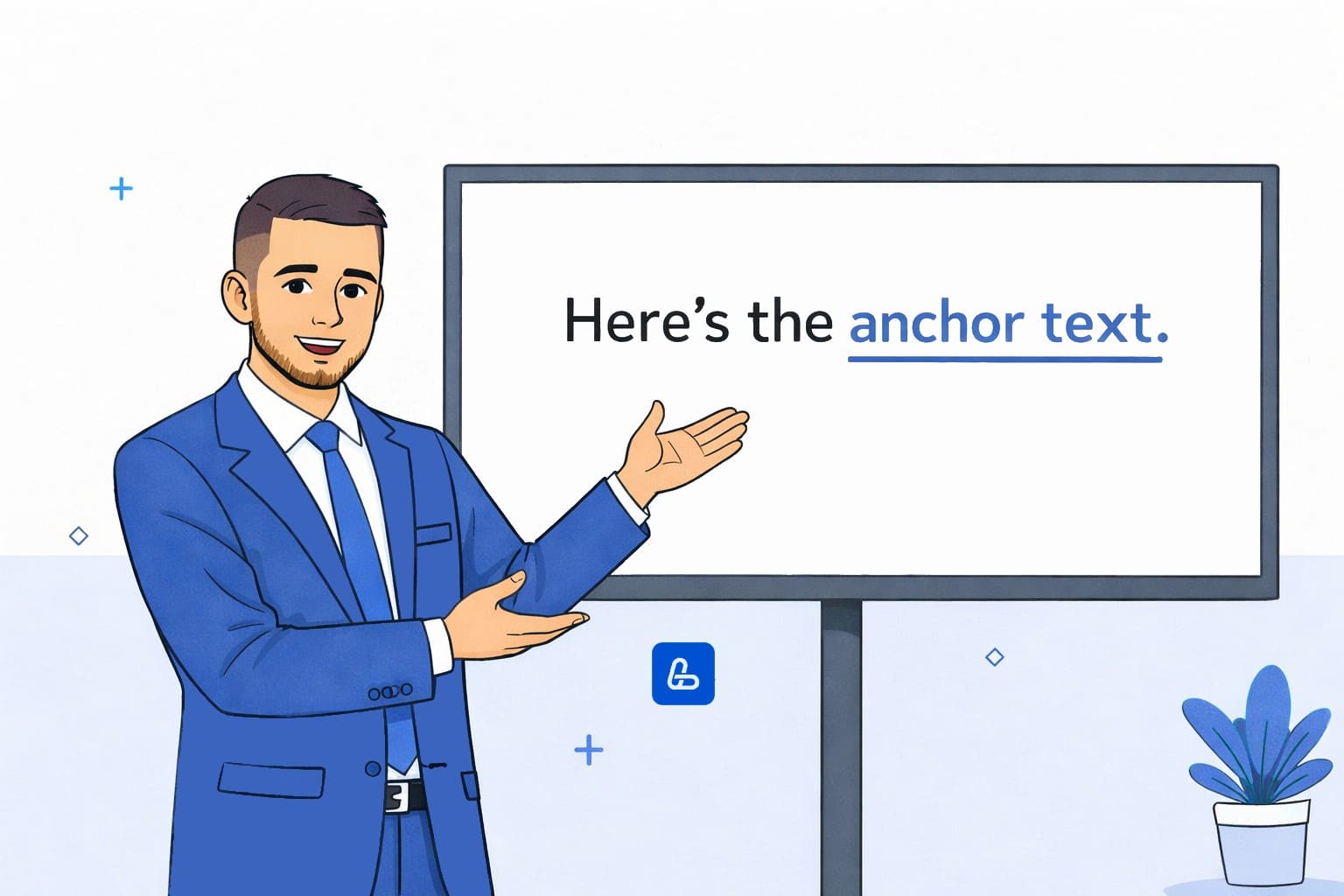
Anchor text is the visible, clickable part of a hyperlink. It’s usually underlined and a different color. For example, in the sentence "Read more about link building in this article," the words "in this article" are the anchor.
You’ll find it everywhere: in your site’s internal links, when you publish a guest post, in articles on other websites, on social media, and even in your navigation menu. Every time you create a link, you’re making a choice about the anchor. That choice directly impacts how both search engines and real people understand the page you’re linking to.
How Anchor Text Helps Search Engines and Users
For search engines like Google, anchor text is a powerful contextual signal. Their crawlers analyze the words in the anchor to better grasp the topic of the linked page. If dozens of sites link to you using the anchor "DIY iPhone repair," Google logically assumes that’s what your content is about.
For users, the anchor is a signpost. It tells them what to expect when they click. Clear, relevant anchor text reduces bounce rates and improves engagement because people aren’t surprised by where they land. You get more qualified traffic that’s ready to engage.
The Evolution of Anchor Text: From Keyword Stuffing to Natural Context
A decade or more ago, SEO was simpler (and riskier). To rank for "buy sofa," you’d just get as many links as possible with that exact phrase as the anchor. It worked… until it didn’t, leading to spam and algorithm crackdowns.
Search engines have gotten much smarter. Today, they value naturalness, semantic variety, and the overall quality of your link profile.
Modern algorithms assess:
- How natural the anchor reads within its sentence.
- Whether you’re repeating the same phrases over and over.
- If the anchor relates to the content around it.
Now, anchor text is just one piece of the puzzle. It works in concert with your page content, site authority, and the quality of sites linking to you. This holistic view is the starting point for all effective work.
Anchor Text Types and When to Use Them
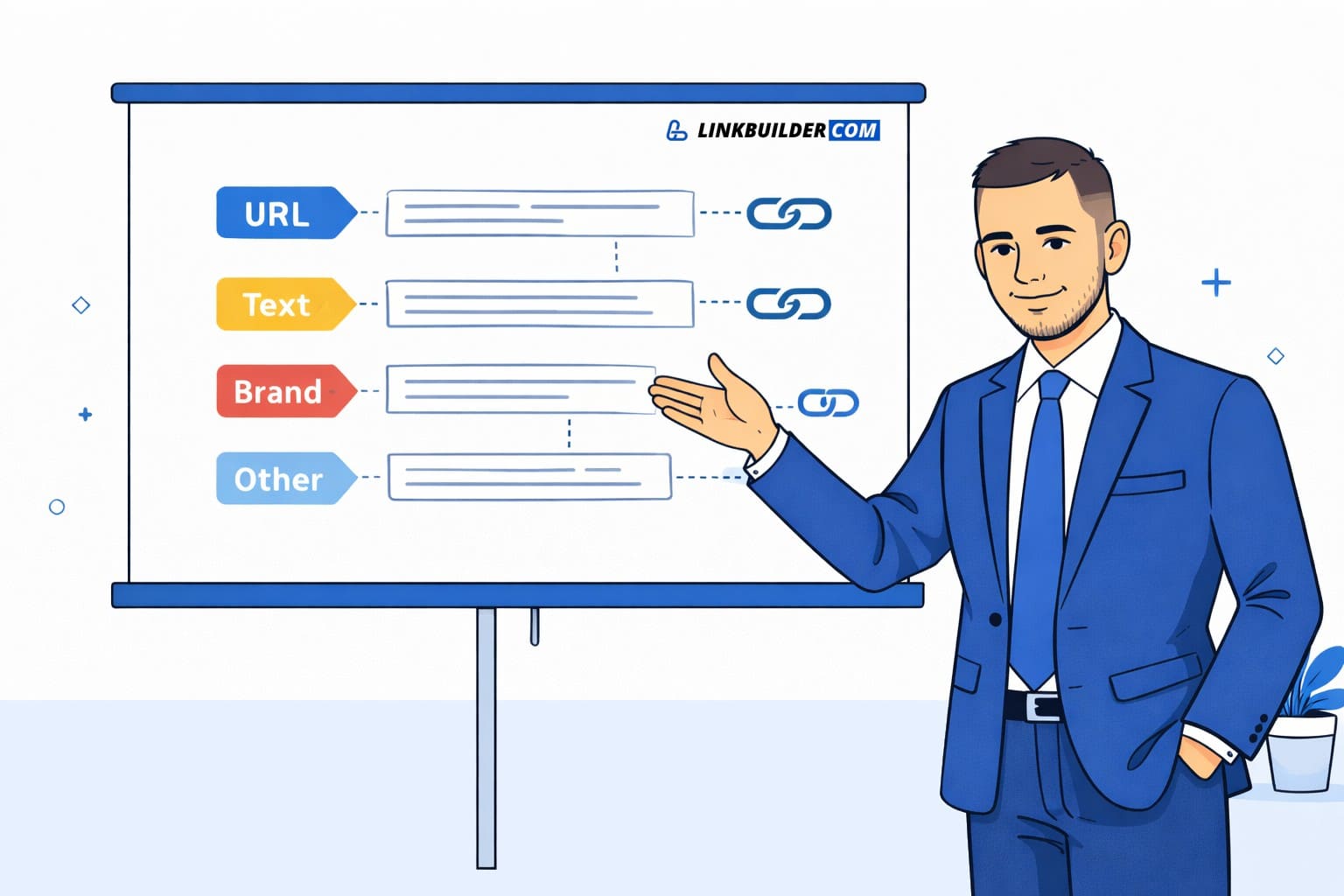
Anchors aren’t inherently "good" or "bad." They’re either appropriate or risky for a given situation. The same link text might help an informational blog post but hurt a product sales page.
To navigate this wisely, you need to understand the different anchor text types, how they function, and where each one fits best.
Commercial & Exact Match Anchors – Use With Caution
Commercial anchors are links that include obvious buying or transactional keywords. Think services, products, or location-based queries. Example: "affordable SEO services."
Exact match anchor text is a specific type of commercial anchor where the anchor is the exact keyword phrase, unchanged.
These anchors:
- Send a very strong, direct SEO signal.
- Quickly tell search engines your page’s focus.
- Can trigger penalties if you use too many.
Use them sparingly and strategically:
- Primarily in your own site’s internal linking.
- In a small number of high-quality external placements.
- On pages with a clear commercial goal (like a "Buy Now" page).
In external anchor text for link building, exact match anchors require extreme care. They’re the most common culprit behind anchor text over optimization.
Partial Match Anchors – Your Go-To for Natural Link Building
Partial match anchor text embeds your target keyword into a longer, more natural-sounding phrase. For example, "a step-by-step guide to effective SEO for restaurants."
This type is great because it:
- Looks and reads much more naturally.
- Drastically lowers your risk of search engine filters.
- Flows better within the context of an article.
Partial match anchors let you maintain relevance without creating an obvious, spammy pattern. They’re perfect for guest posts, reviews, and expert roundups. When building your anchor text strategy, these should form the bulk of your external link anchors.
Branded Anchors – For Trust and Profile Balance
Branded anchor text uses your company name, product name, or domain as the link. Example: LinkBuilder.com.
Search engines see these as authentic, natural mentions. They:
- Build trust and brand recognition.
- Create a healthy, balanced anchor text distribution.
- Act as a safety net, reducing overall penalty risk.
Even for new or lesser-known brands, branded anchor text is essential. It makes your link profile look like people are genuinely talking about you, not just building links for SEO.
Generic & Naked URL Links – The Unsung Heroes
Generic anchor text uses non-specific words like "click here," "learn more," or "this website."
Naked URL links are just the raw web address: https://app.linkbuilder.com.
Both of these:
- Are incredibly common in genuine, natural online content.
- Raise zero red flags with search algorithms.
- Are perfect for diversifying your link profile.
While a "click here" link won’t pass strong keyword relevance, these links are vital for creating a natural-looking anchor text ratio. Use them in social shares, forum comments, and press mentions where a commercial anchor would seem out of place.
LSI Anchors: Theming and Synonyms
LSI (Latent Semantic Indexing) anchors use words and phrases closely related to your main topic, but not the exact keyword. For example, instead of "link building services," you might use "earning quality backlinks."
Search engines understand topics, not just keywords. These anchors:
- Reinforce your page’s core theme.
- Expand the semantic context search engines associate with your site.
- Blend seamlessly into high-quality content.
LSI anchors are ideal for in-depth guides, blog content, and expert articles. They’re a key component of sophisticated anchor text optimization.
Image Anchors (Alt Text)
When you link an image, the anchor text becomes the image’s alt text. Google reads this alt text just like regular link text.
How it works: You have an infographic about marketing strategies that links to your services page. In the HTML, the image tag includes alt="visual guide to content marketing funnel".
- The anchor text here is the alt description.
- It should accurately describe the image for accessibility.
- It should not be stuffed with keywords (e.g., alt="cheap SEO services NYC").
While not a primary link-building tool, image anchors contribute to a diverse and natural anchor text distribution.
How to Build a Smart Anchor List for Link Building
Successful link building is strategic, not random. The core tool for this strategy is your anchor list – a planned set of link texts that keeps your growth safe and effective.
What is an Anchor List and Why You Need One
An anchor list is a organized spreadsheet of the link texts you plan to use for both internal linking and external link acquisition.
Its main job is to give you control over your link profile. Instead of picking anchor text on the fly for each new link, you follow a plan. This helps you avoid anchor text over optimization, build a natural-looking profile, and strategically boost your most important pages. It’s the blueprint for your entire anchor text strategy.
Tools to Analyze Your Anchors: Ahrefs, Semrush & More
Don’t guess – use data. Professional SEO tools give you the insights you need about your site and your competitors.
For anchor text SEO analysis, you need platforms with strong backlink databases:
- Ahrefs is an industry leader. Its "Backlink profile" tool gives you a detailed anchor text audit, showing the types of anchors pointing to your site (or a competitor’s) and how they’re distributed.
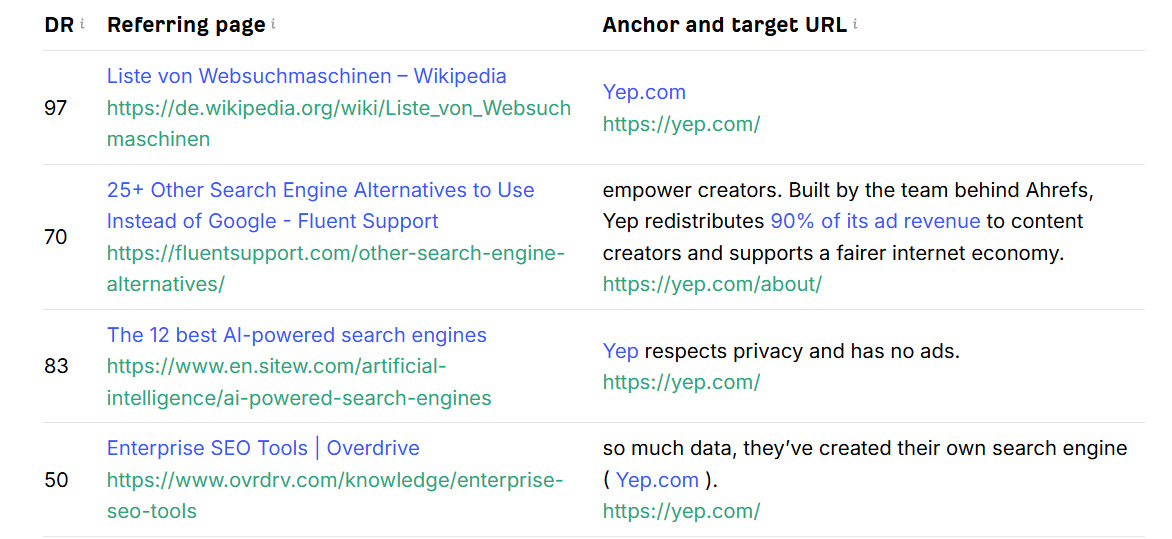
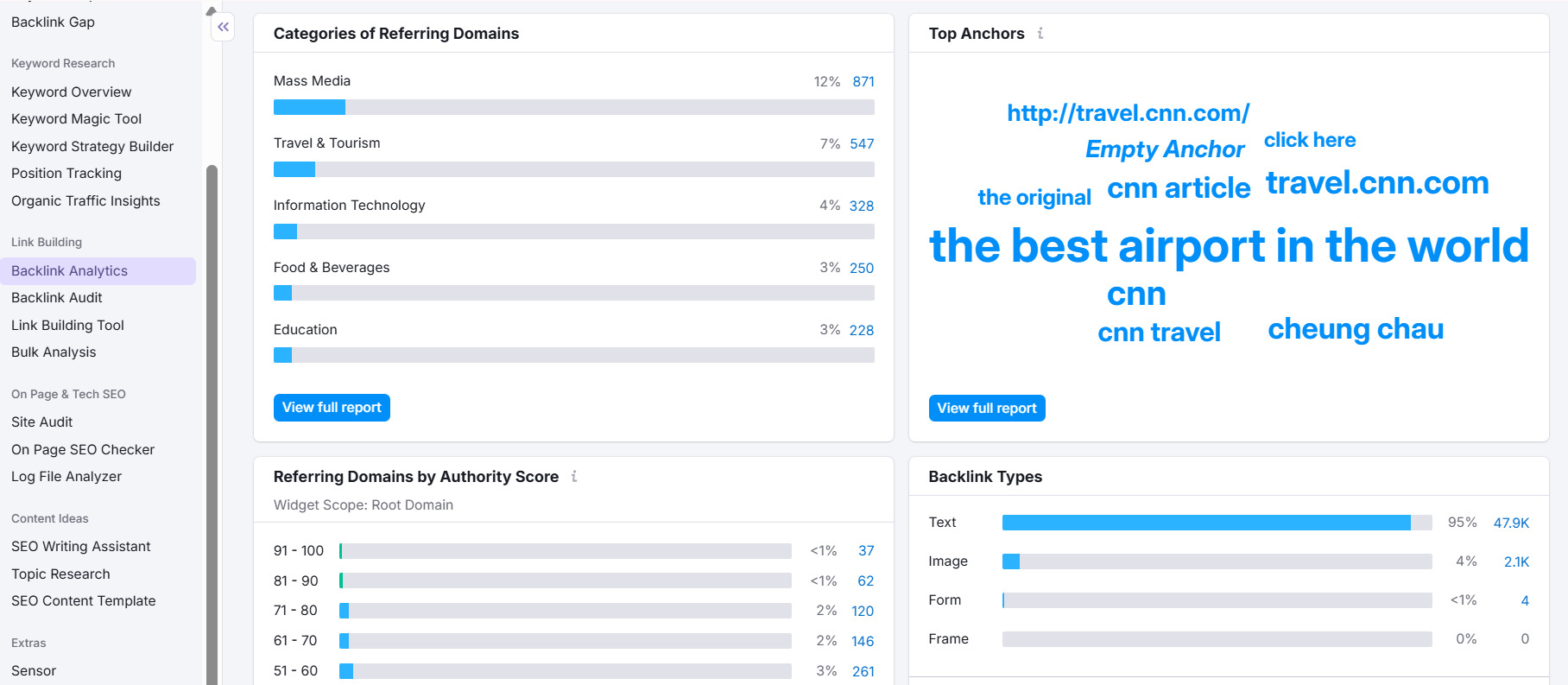
- Semrush offers similar power in its "Backlink Analytics" module, providing a clear overview of any site’s link and anchor profile.
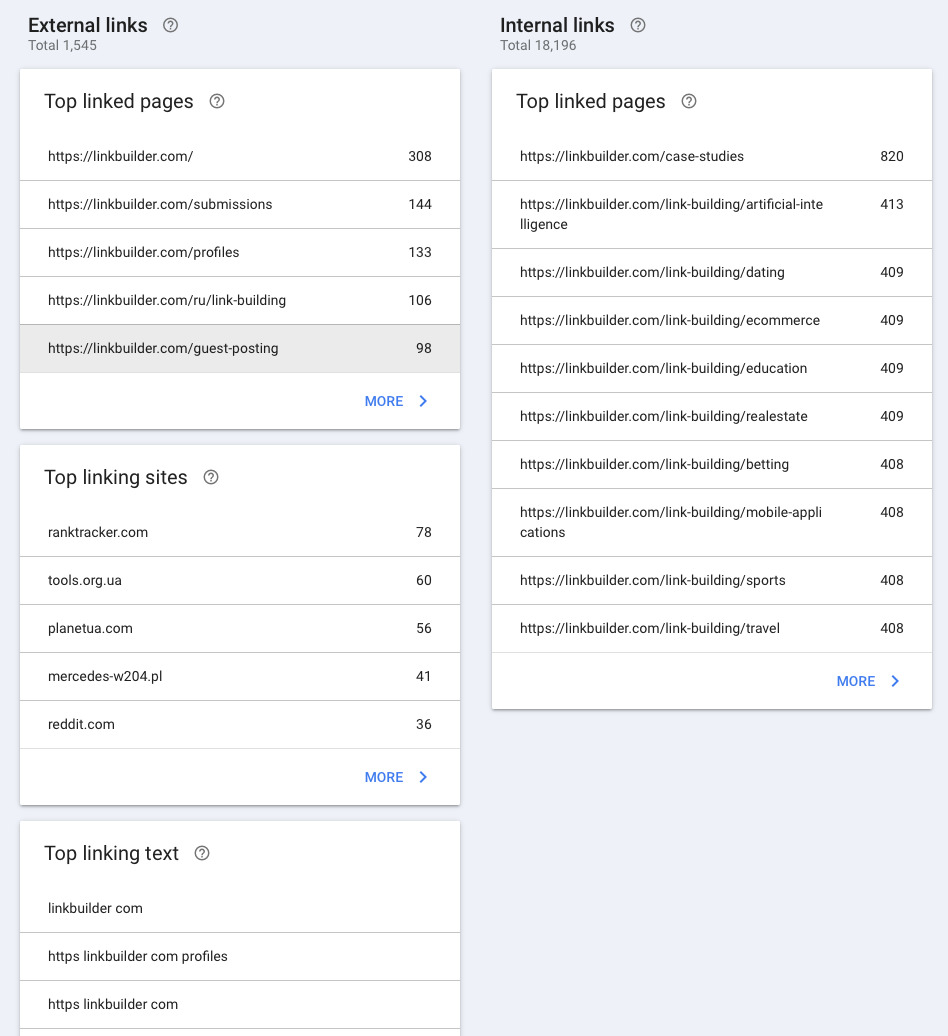
- Google Search Console is mandatory. The "Links" report shows you exactly which anchor text other sites are already using to link to you – invaluable, real-world data.
How to Spy on Your Competitors’ Anchors
See what’s working for the sites already ranking where you want to be. Analyze the top 3-5 players for your main keywords.
Focus on:
- Their Anchor Mix: What’s their anchor text ratio? Are they heavy on branded terms? Do they use many exact matches? This is your benchmark for a natural profile in your niche.
- Where Their Links Come From: Check where competitors get their backlinks. Are they featured in industry journals, local news sites, expert blogs? These are your target platforms.
- Link Quality: It’s not just quantity. One link from a top-tier publication like Forbes is worth more than 100 links from low-quality directories.
- Growth Pace: Are they adding links steadily over time, or did they have a big spike? Mimic a steady, natural growth curve.
This research directly informs your own anchor list and anchor text strategy.
Building Anchor Lists for Different Page Types
Your anchor text optimization approach should vary based on what kind of page you’re promoting.
For the Homepage
Your homepage is your brand’s front door. Promote it on broad, top-of-funnel terms.
- Foundation: Branded anchor text (Company Name, "Official site of [Brand]").
- Supporting Cast: Generic commercial anchors ("top-rated service"), thematic LSI terms about your industry, and a healthy portion of naked URLs.
For Service or Product Pages
These are your most important pages, the ones you need to promote for specific, high-intent keywords. These searches have clear commercial or transactional intent – meaning the user is actively looking to buy or take a specific action.
- Foundation: Partial match anchor text and LSI anchors ("how [service] works in [city]," "benefits of [product]").
- Supporting Cast: A very limited number of exact match anchors, branded+service combos ("[Brand]’s [service]"), and location-based anchors for local SEO.
For Blog Posts
Blogs attract informational traffic and earn natural, editorial links.
- Foundation: Diverse, descriptive anchors that summarize the linked content. Use phrases from the headline, questions, or interesting stats.
- Supporting Cast: Thematic LSI terms, generic CTAs ("see the full data here"), and image anchors. Avoid exact commercial keywords unless the post is a direct pitch.
Remember, your anchor list is a living document. Revisit and tweak it based on your results and changes in the SEO landscape.
Your Anchor Text Profile: What It Is and How to Manage It
If your anchor list is the plan, your anchor profile is the reality. It’s the complete picture of all anchor texts pointing to your site, and ignoring it is like flying blind.
What is an Anchor Text Profile?
Your anchor text profile is the complete collection of every anchor text – from internal links, external backlinks, image alt text, and naked URLs – that points to your domain or a specific page.
Google looks at this entire profile. They’re checking for:
- which words are used most often,
- if there is a skew towards commercial terms,
- if the wording is repetitive.
A profile where 50% of links say "best coffee beans NYC" looks manipulative, even if those links are on decent sites.
How to Measure Your Anchor Text Ratio
The key metric is the anchor text ratio – the percentage breakdown of your different anchor types. The big split is between anchor links and naked URLs, and then further into exact, partial, branded, etc.
Think in percentages, but use these as flexible guidelines, not rigid rules:
- Anchored vs. Naked URLs: A natural profile is usually dominated by non-anchor links (URLs, brand names). A common healthy ratio is around 70-80% non-anchor to 20-30% anchor text.
- Within Anchor Text: Of the text-based anchors, only a small fraction (think 10-20%) should be exact match. The majority should be branded, partial match, and generic.
Why You Can’t Set and Forget Your Anchor Profile
Your profile changes constantly. New links appear, old ones break, and unexpected mentions pop up. Regular check-ups on your anchor text profile are essential maintenance to avoid bigger problems:
- Avoiding Penalties: An unnatural profile stuffed with exact match anchor text for link building is a fast track to a Google filter and lost rankings.
- Boosting Relevance: A diverse, natural profile helps Google fully understand your site’s topics and context, aiding rankings for a wider range of queries.
- Tracking Strategy Success: Audits show if your real-world anchor text distribution matches your planned anchor list and keeps pace with competitors.
This is especially critical in competitive markets where Google’s algorithms are highly tuned to spot manipulation.
Tools for Auditing Your Anchor Profile
Use the same powerful tools for auditing as you did for planning:
- Ahrefs
- Semrush
- Majestic
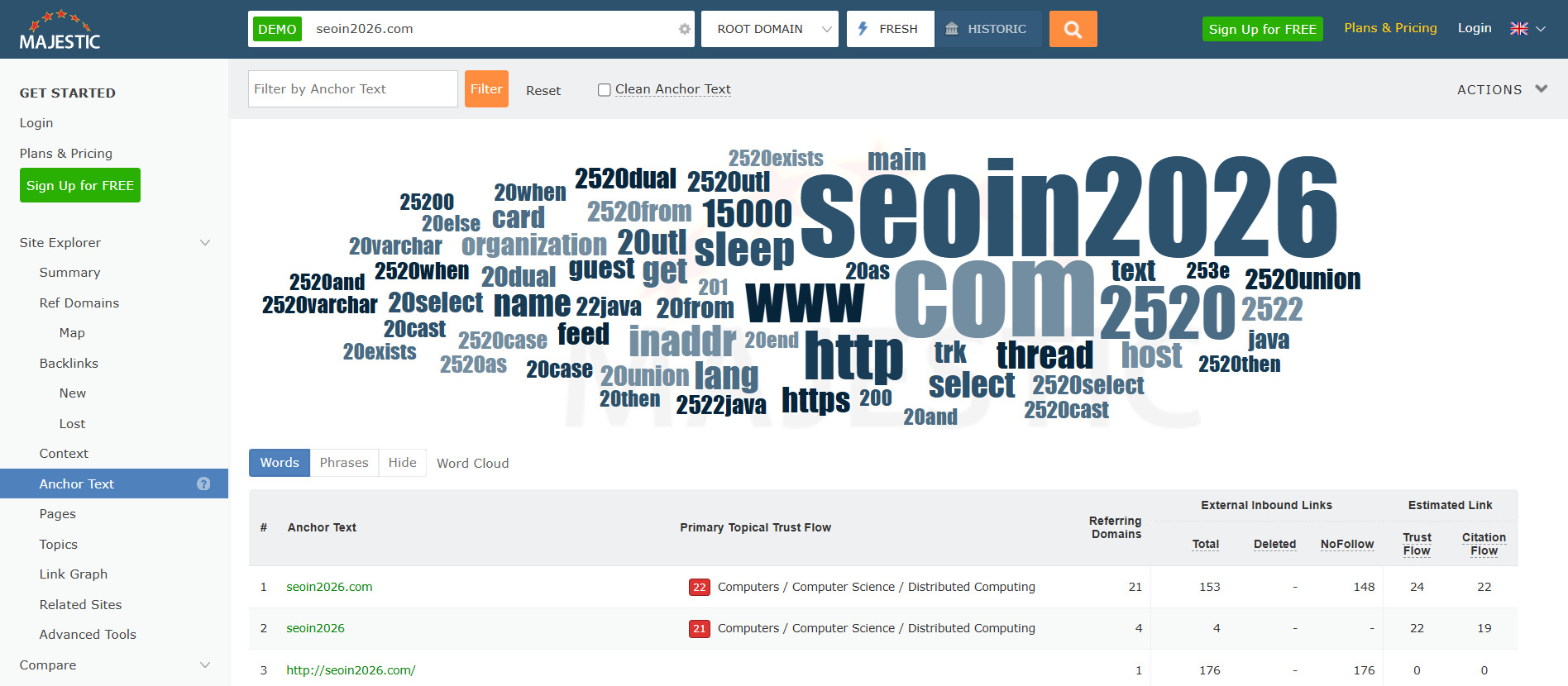
They let you see:
- Every single anchor pointing to your site.
- How many unique sites use each anchor.
- The timeline of when links were acquired.
This data is the core of any serious anchor text audit.
Your Step-by-Step Anchor Audit Checklist
Conduct a comprehensive anchor text audit at least once a quarter. Here is a clear action plan:
- Gather a complete list of anchors. Use Ahrefs, Semrush, or another chosen tool. Export the data to a spreadsheet for easy analysis.
- Classify each link. Separate all anchors into categories: exact match, partial match, branded, generic, no-anchor. Add columns for the donor URL and the target page on your site.
- Calculate the current ratio. Calculate the percentage ratio between the main anchor types. Compare the obtained figures with recommended "safe" ranges and, more importantly, with the profiles of your direct competitors.
- Assess quality and relevance:
- How authoritative and thematically close are the sites linking to you? Are there any spam resources among them?
- Does the anchor text correspond to the content of the page it leads to?
- Is the anchor naturally integrated into the surrounding content on the donor site?
- Identify risks and anomalies. Pay attention to:
- Sharp, unnatural spikes in link building.
- A high percentage of repetitions of the same exact anchor.
- Anchors with grammatical errors or clearly irrelevant queries.
- Links from low-quality sites.
- Create a correction plan. Based on the analysis, determine actions:
- For new links: Adjust the anchor list to shift the anchor text distribution towards a more natural profile.
- For existing problematic links: If possible, contact the webmasters of donor sites to request changing the anchor to a more natural one, adding a `nofollow` attribute, or removing the unnecessary link. In extreme cases, use the "Disavow Links" tool in Google Search Console, but do so with great caution and only for obvious spam.
This approach helps avoid anchor text SEO mistakes in advance and maintain steady growth without sharp declines.
Anchor Text Optimization: Actionable Tips
Anchor text optimization is about daily, balanced decisions. These rules will help you build strong links without setting off alarm bells.
How to Write SEO-Friendly Anchors (That People Actually Want to Click)
Golden Rule: Write for humans first, robots second. Your anchor text should feel like a natural part of the sentence.
Follow these guidelines:
- Stay Relevant. The anchor should accurately preview the linked page. Linking a sneaker review with an anchor that says "buy soccer balls" confuses everyone.
- Sound Natural. Avoid robotic phrases like "cheap sneakers buy online delivery." Instead: "In this review, we compared the best running sneakers you can order with delivery.”
- Provide Context. Don’t just drop a link. The text around it should logically lead to the click, explaining why it’s worth following.
- Offer Value. The anchor should make a promise: what will the user learn, gain, or solve by clicking? Create curiosity or solve a problem.
Good anchor text optimization is just good communication. What works for users almost always works for SEO.
Picking Keywords for Anchors Without Going Overboard

Anchor text over optimization happens when you force keywords in, ignoring how people actually write.
Avoid it with these tactics:
- Expand semantics. Don't use the same key. Take the main keyword (e.g., "SEO audit") and create a cloud of related queries: "website error check," "technical site audit," "SEO report," "position analysis." Use them as a basis for partial match anchor text.
- Dilute phrases. Instead of the exact anchor "order taxi," use "online service for calling a taxi."
- Monitor frequency. If you receive many external links, control that the same key phrase doesn’t repeat across all donors. Within the site, you also shouldn’t use the same anchor dozens of times for a page.
- Analyze competitors. See which anchor text types leaders in your niche use. Their profile is the best benchmark for naturalness.
Diversity and moderation are key. Your anchor text profile should look like many different people are recommending you for various reasons, not like one SEO campaign.
How Long Should Anchor Text Be?
There’s no strict character count, but here’s what works best in practice:
- Short Anchors (1-3 words): "Home," "click here," "our blog." Fine for navigation and generic CTAs, but don’t expect them to pass much topical relevance.
- Sweet Spot (3-5 words): "Google Ads setup guide," "buy a laptop on installments." This length is enough to convey the essence and look natural. Most of your anchors should fall here.
- Long Anchors (6+ words): Often full sentences or questions. Great for in-depth references or quotes (e.g., "how to correctly place anchor texts for article links"). Use them purposefully, not as your default.
Match the length to the context. A news snippet needs a short anchor; a research paper citation warrants a longer, more descriptive one.
Internal Anchors: Power Up Your Site Structure
Internal anchors are your secret weapon. You have complete control, and they powerfully guide both users and search engines through your site.
Use them smartly:
- Build a Hierarchy. Link from your homepage to major category pages with clear, descriptive anchors. Link from those categories to specific service or product pages.
- Create Content Hubs. Build topical "pillar" pages and surround them with related "cluster" blog posts. Link them all together thematically. This shows Google you’re a true authority on the subject.
- Guide the Journey. Use anchor text as a call-to-action within articles. "Ready to start? Order a consultation with our specialist" (link to the form page).
- Be Descriptive. Instead of "learn more," use "discover more tips for setting up retargeting in our separate guide." It’s better for users and for SEO.
- Don’t Forget Navigation. Your menu links and breadcrumb trails are all internal anchors. Make them clear and keyword-rich where it makes sense.
Smart anchor text optimization internally improves user experience, helps Google crawl your site, and spreads ranking power to your important pages.
Safe Anchor Text: Avoiding Penalties and Over-Optimization
Penalties rarely come out of nowhere. Usually, a site drifts into dangerous territory for months – repetitive anchors, too many commercial links, unnatural growth spikes. Eventually, the algorithm notices the pattern. Understanding safe anchor text SEO isn’t optional; it’s essential for any site that wants to last.
What Does Anchor Text Over-Optimization Look Like?
Anchor text over optimization is when your link-building looks artificial and manipulative, not organic.
The telltale signs:
- Unnatural anchor ratio. If 30-40% of your backlinks are exact match commercial keywords, and you have almost no branded links, it’s a huge red flag.
- Suspicious growth patterns. Your link graph shows vertical spikes, typical of buying link packages, rather than a steady, gradual incline.
- Low donor quality. Links are placed in poorly moderated directories, spam comments, or spam sites. Content around the link is irrelevant or meaningless.
- Lack of no-anchor mentions. A complete absence of naked URLs or generic mentions (like "their website") is highly unnatural.
- Robotic repetition. Anchors are monotonous and look like a keyword list: "iPhone repair," "fix iPhone," "urgent iPhone repair."
If your anchor text profile matches this description, you’re at high risk.
How Search Engines Spot Bad Anchor Practices
Search engines like Google (with its Penguin algorithm launched back in 2012) have been catching manipulative links for over a decade. They don’t look at links in isolation but at the whole pattern.
An unnatural profile is a statistical outlier. Algorithms compare your profile to thousands of others in your niche. If all your top competitors have profiles rich in branded mentions, and yours is stuffed with exact matches, you stand out – in a bad way.
They also evaluate context:
- Source Authority: A link from the New York Times carries more positive weight (and scrutiny) than 100 links from unknown blogs.
- Editorial Fit: Does the anchor read naturally within the article, or is it clumsily stuffed in?
- Source History: If a site linking to you is itself penalized, that link can hurt you.
Algorithms are constantly trained on real data about how people naturally link to each other. Any deviation from this model is considered suspicious.
Building Links the Safe Way
Safety comes from prioritizing authenticity and long-term value.
- Quality is King. Focus on earning links from reputable industry sites, news outlets, and established blogs, not on hitting a link quantity target.
- Embrace Natural Distribution. Design your anchor text strategy for a mixed profile from the start. Aim for high percentages of branded and generic links.
- Diversify Your Link Types. Go beyond guest posts. Pursue brand mentions in news (HARO), expert interviews, original research reports, and high-value resource pages.
- Grow Steadily. A natural link profile accumulates gradually. Avoid services that promise 100 links in a month. Consistent digital PR and great content attract links at a believable pace.
- Insist on Relevance. The linking site and the surrounding content should be a logical fit for your brand. A link from a parenting blog to a B2B software tool looks odd and spammy.
Where can you get safe, professional link building?
This safe, strategic approach is our standard at LinkBuilder.com. We don’t sell link packages; we earn authentic brand citations and expert mentions in truly authoritative sources.

Our process is built for safety and measurable results:
- Audit and Strategy: We analyze your current profile and goals to create a custom plan with a healthy target anchor text distribution.
- Platform Selection: We manually find and vet authoritative, relevant sites where a mention of your brand makes genuine sense.
- Creation and Integration: We develop high-quality, expert content and organically integrate mentions of your brand on external resources.
- Implementation and Reporting: We control placement and provide detailed reporting on each mention.
- Monitoring: We monitor changes in the profile and adjust the strategy for long-term results.
We build anchor text profiles dominated by safe, natural mentions, aligning perfectly with modern search engine guidelines to protect your site.
Professional link building with LinkBuilder.com is an investment in sustainable growth. We build a profile that drives results without the risk.
What to Do If You’re Worried About Penalties
If you spot red flags or see rankings drop, don’t panic. Act methodically:
- Run a Full Audit. Use Ahrefs/Semrush to export all your backlinks and conduct a thorough anchor text audit as outlined above.
- Identify the Worst Offenders. Tag links from spam sites, exact match overuse, and irrelevant donors.
- Try to Clean Up. Reach out to webmasters to remove or change the most problematic links. Start with the obvious spam.
- Use Disavow as a Last Resort. If you cannot remove toxic links, use Google’s Disavow Tool to disown them. Use it only for clear-cut spam you can’t otherwise remove.
- Change Your Strategy. Pivot hard to earning quality, brand-focused links to dilute the bad signals over time.
- Be Patient. Recovery takes time. After cleaning up and shifting your strategy, it can take several months for Google to reassess your site.
The goal is to move from tactical, risky link building to a strategic, brand-building approach that search engines reward.
Common Anchor Text Mistakes & Myths (Debunked)

Most anchor text problems stem from outdated advice or copying what "worked" years ago. Let’s clear up the confusion.
Mistake #1: The Exact Match Obsession
The biggest error is thinking you need to use your exact target keyword as the anchor for every link. We've already talked about why this harms promotion: anchors start repeating, the profile looks artificial, and the risk of filters increases.
Search engines understand synonyms and context. Your page for "running shoes" can rank just fine with anchors like "best sneakers for marathon training" or "durable athletic footwear." Exact match is a tool, not the whole toolbox.
Mistake #2: Ignoring Brand & Generic Links
Many underestimate branded anchor text and mentions, thinking they’re "weak."
In reality, they:
- make the profile natural,
- build trust,
- protect against sanctions.
They are your safety net. A profile with plenty of "YourBrand.com" and "their website" links looks legitimately popular, not artificially optimized.
Mistake #3: The "Blitz" Approach
Even good anchors can harm if they appear too quickly. This is especially true for commercial formulations.
Typical situation:
- many links appear in a month,
- anchors are similar to each other,
- donors are of the same type.
Algorithms look not only at the text but also at the dynamics. Sharp spikes are one of the main triggers for checks.
Myth #1: The "Perfect" Anchor Ratio Exists
You’ll see formulas like "60% branded, 20% URL, 10% exact, 10% generic." These are rough guides, not holy writ.
Your ideal anchor text ratio depends on your industry, brand maturity, and competitor landscape. A new local business will have a different profile than an established tech giant. Use benchmarks as a guide, not a gospel.
Myth #2: Shorter is Always Better
The old belief was that anchors should be 1-2 keyword-packed words. This leads to stilted, spammy text.
This is an outdated approach. Today, the following work better:
- phrases embedded in a sentence,
- descriptive wording,
- natural transitions.
An anchor is a natural part of the text, not a label. If it reads like a human wrote it is always safer and more effective.
Myth #3: Internal Links Are a "Free Pass"
It’s tempting to over-optimize internal links with exact match anchors everywhere.
Indeed, internal linking is under your full control. But that doesn't mean you can place a link ten times on one page to another with the same exact anchor.
Over-spam inside a site worsens content perception, complicates navigation for users, and creates "overheated" zones with excessive weight. Internal links should first and foremost be useful and logical, and their anchors should naturally describe the section they lead to.
Final Checklist for Safe Anchor Text in 2026
Working with anchor text is a balancing act. To ensure your efforts bring only growth, not problems, follow this simple but comprehensive checklist. Save it as a reminder before each link building stage.
Your Safe Anchor Text Strategy Checklist
- Planning and Analysis
- Conducted a deep anchor text audit of your site and at least 3 key competitors.
- Compiled an anchor list with priority on branded, thematic (LSI), and partial match anchors.
- Identified target pages for strengthening, prepared separate anchor lists for them.
- Creation and Placement
- Each anchor text is useful, relevant, and accurately describes the destination page.
- Anchors are naturally integrated into the content, not standing out.
- For external links, priority is given to donor platform quality, not link quantity.
- Internal anchors are used to improve navigation and distribute weight, without aggressive repetition of the same phrases.
- All main anchor text types are used: branded, partial match, generic, LSI, no-anchor links.
- Control and Safety
- New links are added gradually, without sharp spikes in mass growth.
- The current anchor text profile is regularly analyzed (e.g., quarterly).
- Unnatural patterns are tracked: spikes, repeating anchors, links from irrelevant sites.
- An action plan is ready in case anchor text over optimization or toxic links are detected (from contacting webmasters to the Disavow tool).
- Every decision is checked with the question: "Does this link and its anchor look like a natural mention a satisfied client or a respected expert could leave?"
Stick to these principles for sustainable growth. For a hands-off, professional approach to executing this safely, consider expert help.
LinkBuilder.com builds natural, powerful, and penalty-proof link profiles.
We handle the entire cycle – from audit to strategy to secure placement in authoritative media. Our focus on safe anchor text and organic growth aligns perfectly with 2026’s search engine standards.
Get in touch to start building a safe, results-driven link profile.